
True Sustainability
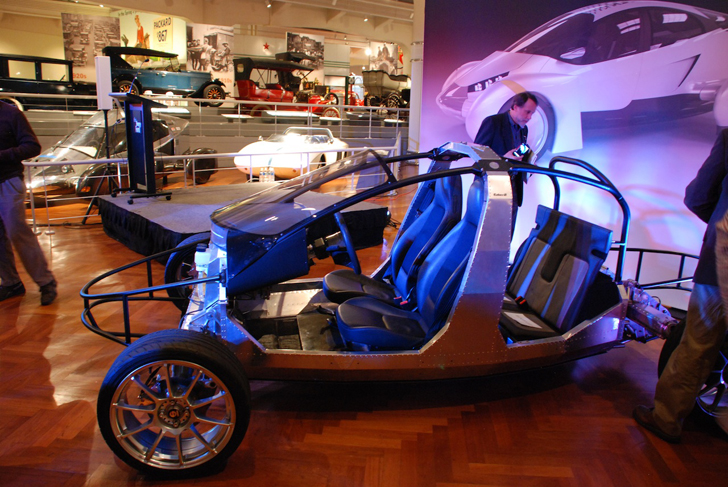
The Very Light Car: cradle-to-grave sustainability. An environmentally responsible car should be measured not just in fuel economy but by considering all environmental impacts. The low mass of the VLC means fewer material inputs are needed. Automobile materials vary greatly in environmental impacts. Carbon fiber is energy-intensive to produce and difficult to recycle, while batteries are laden with hazardous, scarce and heavy metals. While our X Prize cars had carbon-fiber bodies, as we move to commercialization we rely on readily available and fully recyclable aluminum and steel, and conventional composites and plastics.
Our Very Light Cars require little energy to move – only 5.3 hp to cruise at 60 mph – and are incredibly efficient regardless of how they are powered. The X Prize VLC achieved 104 MPGe (combined) with a 250 cc internal combustion engine running on E85. Our electric VLC set a new standard for 4-person electric cars with 245 MPGe on the EPA 5-cycle test (combined), and a VLC with a Smart Car drivetrain recorded 89 MPG (highway), compared to 41 in the Smart.
Is the future of the automobile electric? If it is, Edison2 is the enabler of widespread acceptance. Our electric car demonstrates reasonable range with a small battery pack, solving issues of range, battery cost and charging time.
Whether electric or not, the future demands light vehicles. Not only as a simple means to better fuel efficiency, but for the secondary benefits: less energy in production, and less wear on roads, brakes and tires.